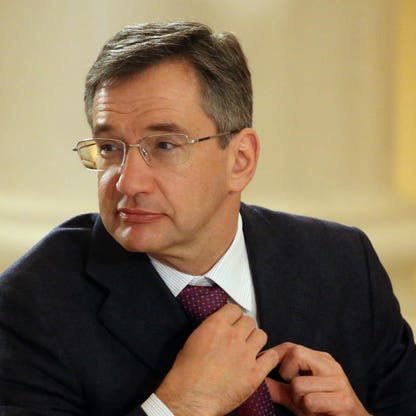
Inside Nikita Mishin's Wealth: Global Ports & N-Trans Strategies
Nikita Mishin stands as a testament to strategic vision and astute business acumen within Russia's vital infrastructure sector. His journey from a philosophy student to a formidable billionaire is intricately linked with the growth of two giants: N-Trans Group and Global Ports Investments. For those curious about the sources of his immense fortune, exploring
Nikita Mishin's net worth reveals a narrative of calculated risks, powerful partnerships, and timely divestments that have reshaped the logistics landscape. As of March 2013, Forbes estimated his net worth at an impressive $1.35 billion, positioning him among Russia's wealthiest and a significant figure on the global stage. This article delves into the strategies that forged this impressive wealth, examining the foundational companies and the pivotal decisions that propelled Mishin to billionaire status.
The Genesis of a Billion-Dollar Empire: N-Trans Group
The bedrock of Nikita Mishin's fortune can be traced back to 1996, when he, alongside Konstantin Nikolaev and Andrei Filatov, laid the foundation for what would become a logistics powerhouse. Their initial venture, *Severstaltrans company*, was born from a keen understanding of Russia's burgeoning need for efficient transportation and port infrastructure.
From Philosophy Student to Shipping Visionary
It's a common thread among many successful entrepreneurs that their formal education often takes a backseat to their entrepreneurial drive. Nikita Mishin was still pursuing philosophy at Moscow State University when he teamed up with his future partners. This unconventional background perhaps instilled in him a unique perspective on problem-solving and strategic thinking, qualities that would prove invaluable in the cutthroat world of Russian business.
Severstaltrans quickly carved out a niche as a railway and port operator, capitalizing on the vast logistical demands of the country. The early days saw a crucial investment from billionaire Alexei Mordashov, an important endorsement of the company's potential. However, displaying a clear vision for autonomous growth, Mishin and his partners strategically bought out Mordashov's stake in 2007. This move allowed them full control over their strategic direction. A year later, in 2008, Severstaltrans was rebranded as the *N-Trans Group*, signaling a new era of expansion and consolidation.
Analysis: The decision to buy out a powerful early investor like Mordashov highlights the founders' ambition and confidence in their collective vision. It's a key lesson for entrepreneurs: sometimes, regaining full control, even at a cost, is essential for long-term strategic alignment and agile decision-making. N-Trans, under this renewed leadership, was poised for its most significant transformations.
Global Ports Investments: A Strategic Public Offering and Lucrative Divestment
A pivotal moment in the growth of Nikita Mishin's wealth came with the development and strategic handling of *Global Ports Investments*. This entity quickly became one of the largest operators of port terminals in Russia, a critical asset in a country heavily reliant on seaborne trade.
Dominating Russia's Port Landscape
Recognizing the immense value locked within their port operations, the trio of founders made a bold move in the summer of 2011: they took Global Ports Investments public. This initial public offering (IPO) successfully raised approximately $500 million, injecting substantial capital into the company and providing a clear market valuation for their assets. The IPO was a testament to the robust growth and strategic positioning of Global Ports, offering investors a stake in Russia's expanding trade infrastructure.
Practical Tip: Taking a company public is a complex process but, when timed correctly, can unlock significant capital for further expansion or shareholder returns. It provides liquidity and establishes a clear market value, which can be crucial for future strategic maneuvers.
The Maersk Deal: Unlocking Massive Value
The strategic brilliance didn't end with the IPO. In October 2012, Mishin and his partners executed another masterful stroke by selling a 37.5% stake in Global Ports Investments for an impressive $863 million. The buyer? A subsidiary of the Danish shipping giant A.P. Moller-Maersk. This transaction was highly significant for several reasons:
* **Premium Valuation:** The sale price significantly exceeded the initial IPO valuation for a substantial portion of the company, demonstrating the partners' ability to enhance value post-listing.
* **Strategic Partnership:** Aligning with a global leader like Maersk not only provided a substantial cash injection but also brought a powerful international partner into Global Ports, potentially opening doors to new synergies and operational efficiencies.
* **De-risking:** Selling a significant minority stake allowed the founders to realize a substantial portion of their investment while retaining a controlling interest and ongoing influence in the company's future.
This move alone substantially bolstered
Nikita Mishin's net worth, showcasing his adeptness at identifying peak market conditions for strategic divestment. It underscored a philosophy of creating value, demonstrating it, and then strategically realizing a portion of that value to fuel further ventures or secure returns.
Strategic Divestment and Diversification: Beyond Ports & Rails
While ports and railways formed the core, Mishin's strategic approach extended to carefully timed divestments and calculated diversification into related infrastructure sectors, further cementing his financial standing.
Navigating the Railway Sector: Transoil and Timchenko
The agility of Mishin and his partners was again evident in the fall of 2012. They chose to sell their 13% stake in *Transoil*, another railway operator, to Gennady Timchenko. This transaction is particularly noteworthy given Timchenko's well-known close ties to Russian Prime Minister Vladimir Putin.
Analysis: In the Russian business landscape, strategic relationships can be as valuable as operational efficiency. Selling to a figure like Timchenko suggests an understanding of the political economy and the importance of navigating powerful networks. It also allowed Mishin and Nikolaev to monetize another asset in a potentially complex sector, reducing their exposure while realizing profit. This type of strategic exit often reflects a desire to streamline portfolios or reallocate capital to higher-growth opportunities.
Expanding Horizons: The Mostotrest Investment
Demonstrating a commitment to the broader infrastructure sector, Mishin and his partners also held significant shares in *Mostotrest*, a leading construction company. This investment proved prescient when, in November 2013, Mostotrest secured a massive $4.6 billion tender to construct a crucial segment of the M-11 highway, connecting Moscow and St. Petersburg.
Insight: Diversifying into complementary sectors like construction allowed Mishin to leverage his understanding of large-scale infrastructure projects. While ports and railways focus on logistics flow, construction tackles the physical arteries of a nation. This move highlights an integrated vision for national development and the ability to identify lucrative opportunities across the infrastructure value chain. It also insulated their wealth from over-reliance on a single industry, demonstrating a shrewd approach to portfolio management.
Lessons from a Logistics Mogul: Key Takeaways
Nikita Mishin's career offers valuable insights for aspiring entrepreneurs and business leaders alike. His trajectory is a masterclass in building, scaling, and strategically managing substantial assets within a challenging yet opportunity-rich environment.
- Visionary Leadership: From a philosophy student, Mishin envisioned integrated logistics solutions long before they became commonplace, recognizing the fundamental need for efficient transportation in Russia.
- Strategic Partnerships: The initial formation with Filatov and Nikolaev, the early investment by Mordashov (and subsequent buyout), and the later alliance with Maersk all underscore the critical role of choosing the right partners at each stage of growth.
- Timing is Everything: Mishin demonstrated exceptional timing, whether it was taking Global Ports public, selling a substantial stake to Maersk, or divesting from Transoil. Understanding market cycles and acting decisively can unlock immense value.
- Calculated Diversification: While maintaining focus on core competencies (ports and railways), strategic expansion into related sectors like construction (Mostotrest) showcased an ability to spread risk and seize new opportunities within the broader infrastructure landscape.
- Leveraging Networks: The transaction involving Gennady Timchenko subtly highlights the importance of understanding and navigating influential business and political networks, particularly in economies like Russia's.
For anyone looking to understand the dynamics of large-scale enterprise in developing markets,
Nikita Mishin's journey: From Student to Shipping Billionaire provides a rich case study of entrepreneurial success.
Conclusion
Nikita Mishin's estimated net worth, propelled by his foresight and strategic decisions concerning N-Trans Group and Global Ports Investments, positions him as a significant figure in global logistics and infrastructure. His story is one of consistent growth, marked by the transformation of initial ventures into public entities, strategic sales to international titans, and judicious diversification into related sectors. By meticulously building, valuing, and monetizing his assets, Mishin has not only amassed significant personal wealth but has also played a crucial role in shaping Russia's modern transportation infrastructure. His approach serves as a powerful reminder that in the complex world of global commerce, a blend of entrepreneurial vision, astute partnerships, and impeccable timing can pave the way to monumental success.